
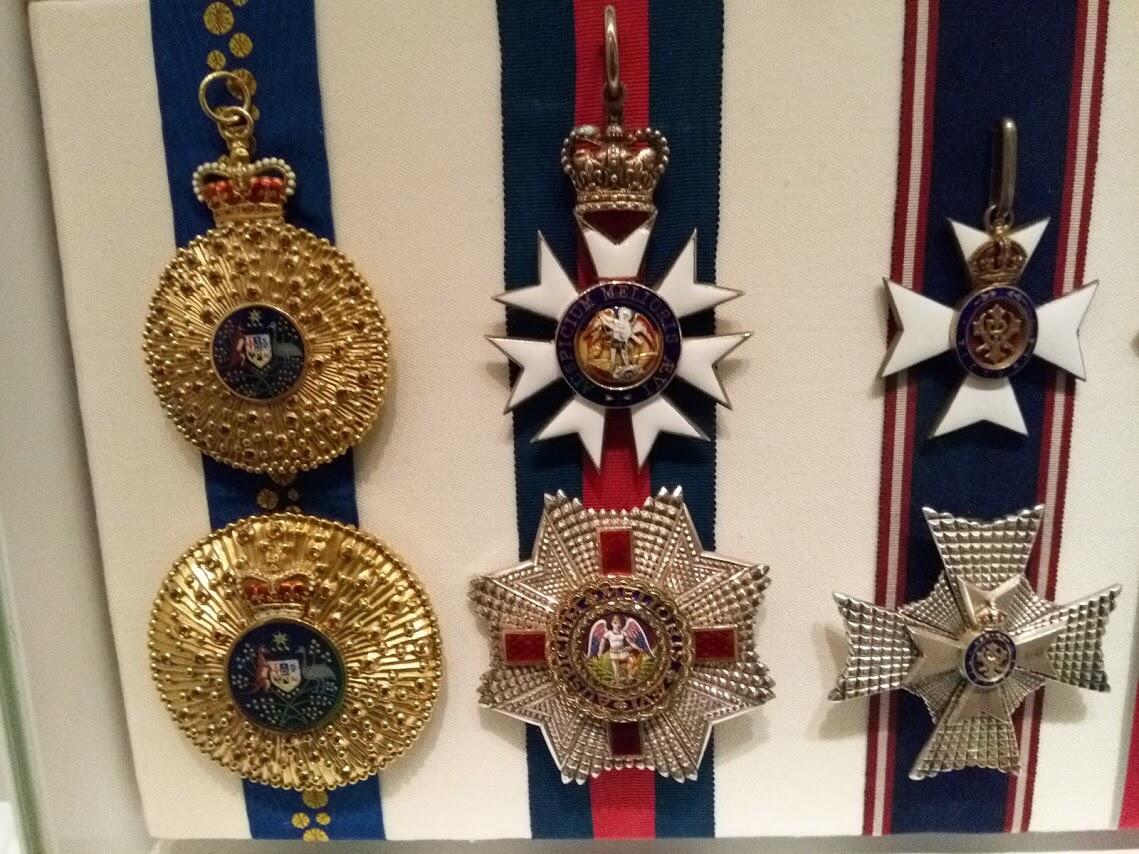

The UK and Australia have a long shared history and are both part of the Commonwealth. But did you know Australia has its own honours system to recognise people who make a difference to the country?
One of its best-known honours is the Order of Australia, which recognises people for their achievements and service to the community.
In this guide, we’ll look at the four levels of the Order of Australia, what the letters after a recipient’s name mean, and how you can nominate someone.
The Order of Australia is the national honour recognising outstanding service and achievement, with four levels in General and Military divisions. 1
📍AC: Companion of the Order of Australia
📍 AO: Officer of the Order of Australia
📍AM: Member of the Order of Australia
📍OAM: Medal of the Order of Australia


What is the Order of Australia
Established in 1975, the Order of Australia forms part of Australia’s honours system, which confers the highest recognition for outstanding achievement and service.
There are two divisions of the Order of Australia: the Civil General Division and the Military Division.
General Division
- Community-nominated awards for service and achievement
Military Division
- Appointments recommended to the Governor-General by the Minister for Defence
Four key institutions play a role in administering the Order of Australia, from receiving nominations to approving appointments and publishing official guidance.
| Institution | Official role |
|---|---|
| Governor-General of Australia | As Chancellor of the Order, formally makes appointments and awards in the General and Military divisions. |
| Council for the Order of Australia | Independently considers General Division nominations and recommends outcomes directly to the Governor-General. |
| Australian Honours and Awards Secretariat | Receives and researches nominations, processes them in order of receipt, and supports the Council’s work. |
| Department of the Prime Minister and Cabinet (PM&C) | Handles recognition of non-citizens through honorary awards for extraordinary service to Australia or humanity at large. |
The Order of Australia replaces the previous use of British imperial honours for Australians. Knights and Dames existed during 1976–1986 and 2014–2015, but are no longer part of the modern Order. 2
The Four Levels and Their Post‑Nominals (General vs Military)
Now, let's review the four different levels of the Order of Australia and the example of recipients from different fields and their respective contributions. 3
We'll be looking at the General Division first.
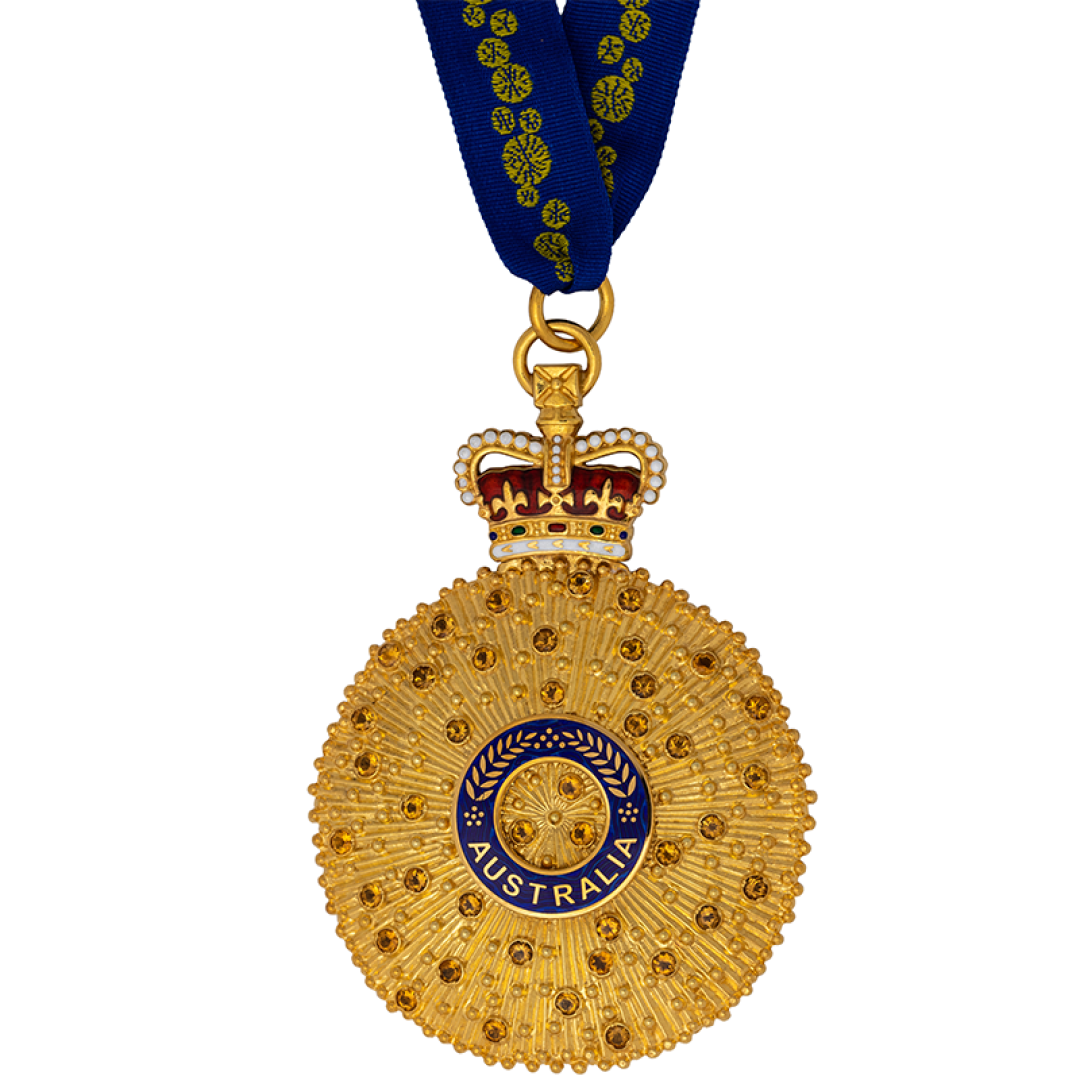
Companion of the Order of Australia (AC)
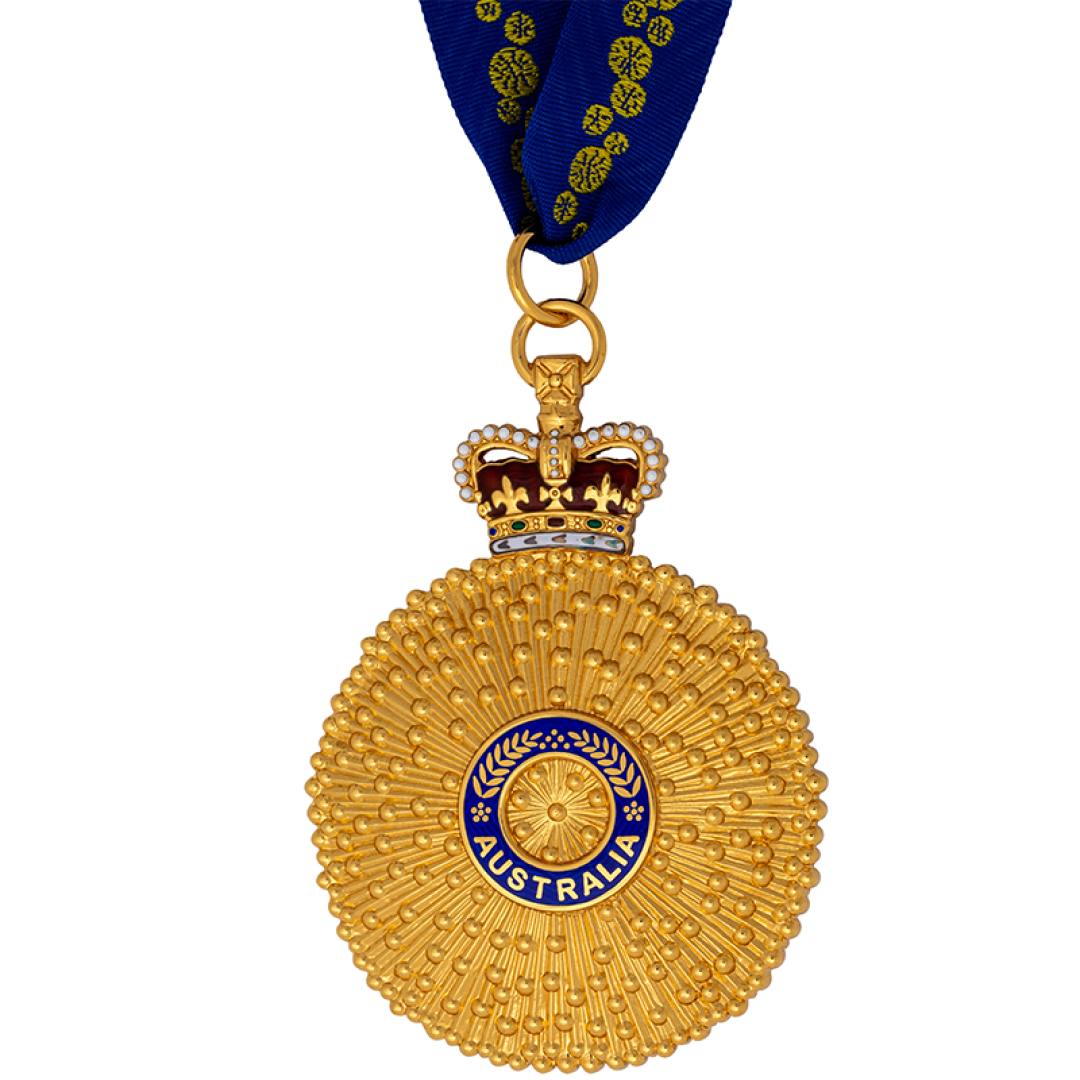
Officer of the Order of Australia (AO)
Source: Department of the Prime Minister and Cabinet.
© Commonwealth of Australia 2023.
Licensed under CC BY 4.0.
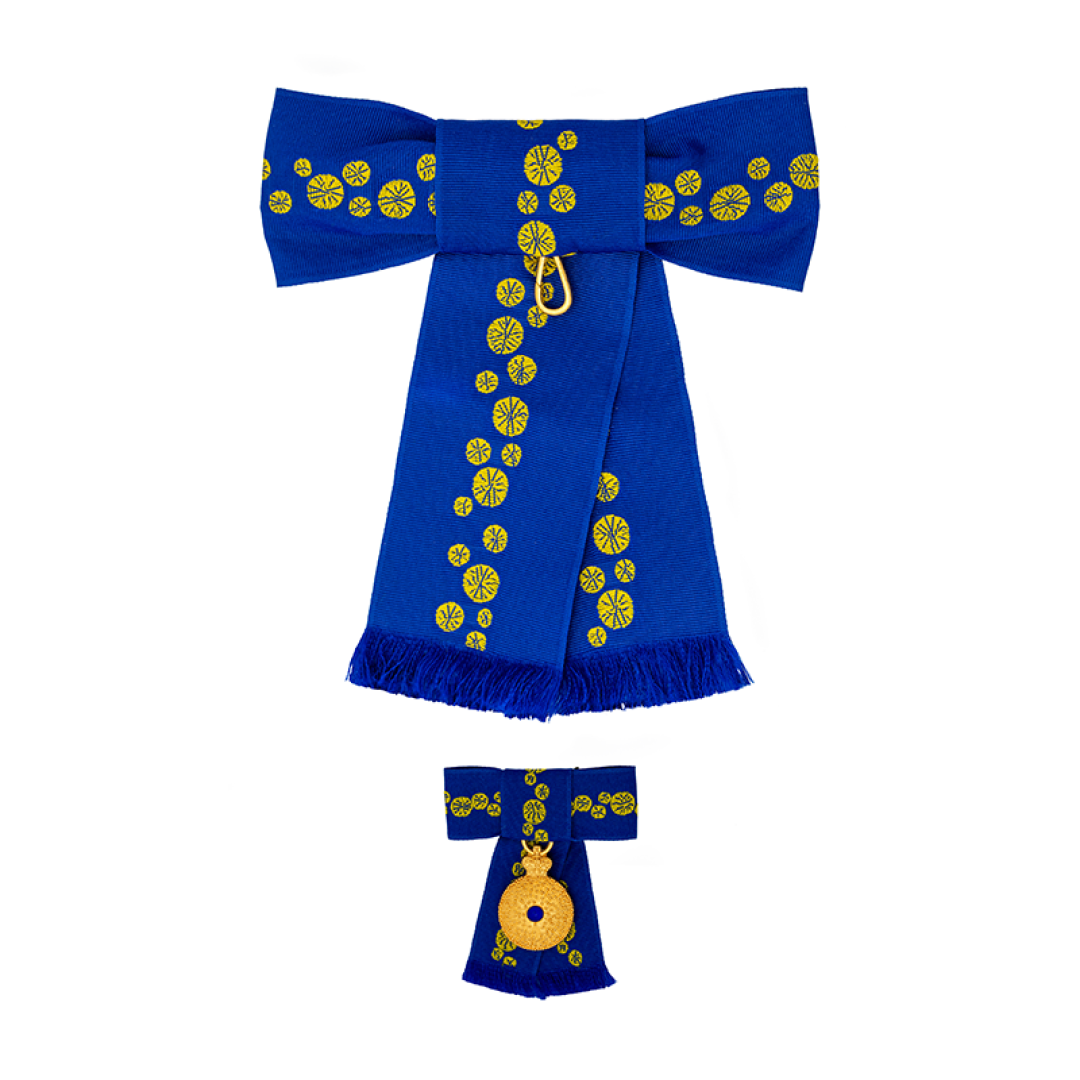
Member of the Order of Australia (AM)
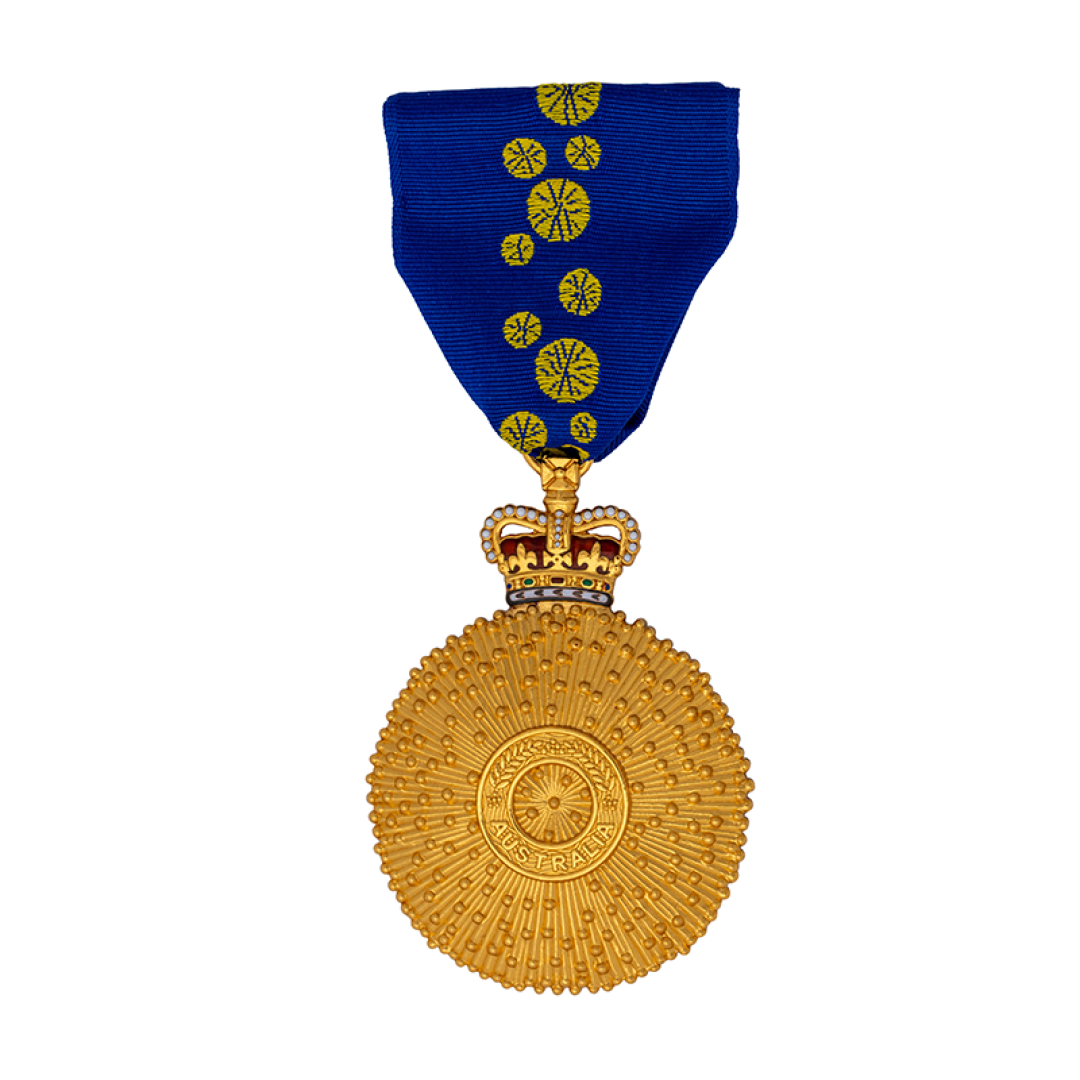
Source: Department of the Prime Minister and Cabinet.
© Commonwealth of Australia 2023.
Licensed under CC BY 4.0.
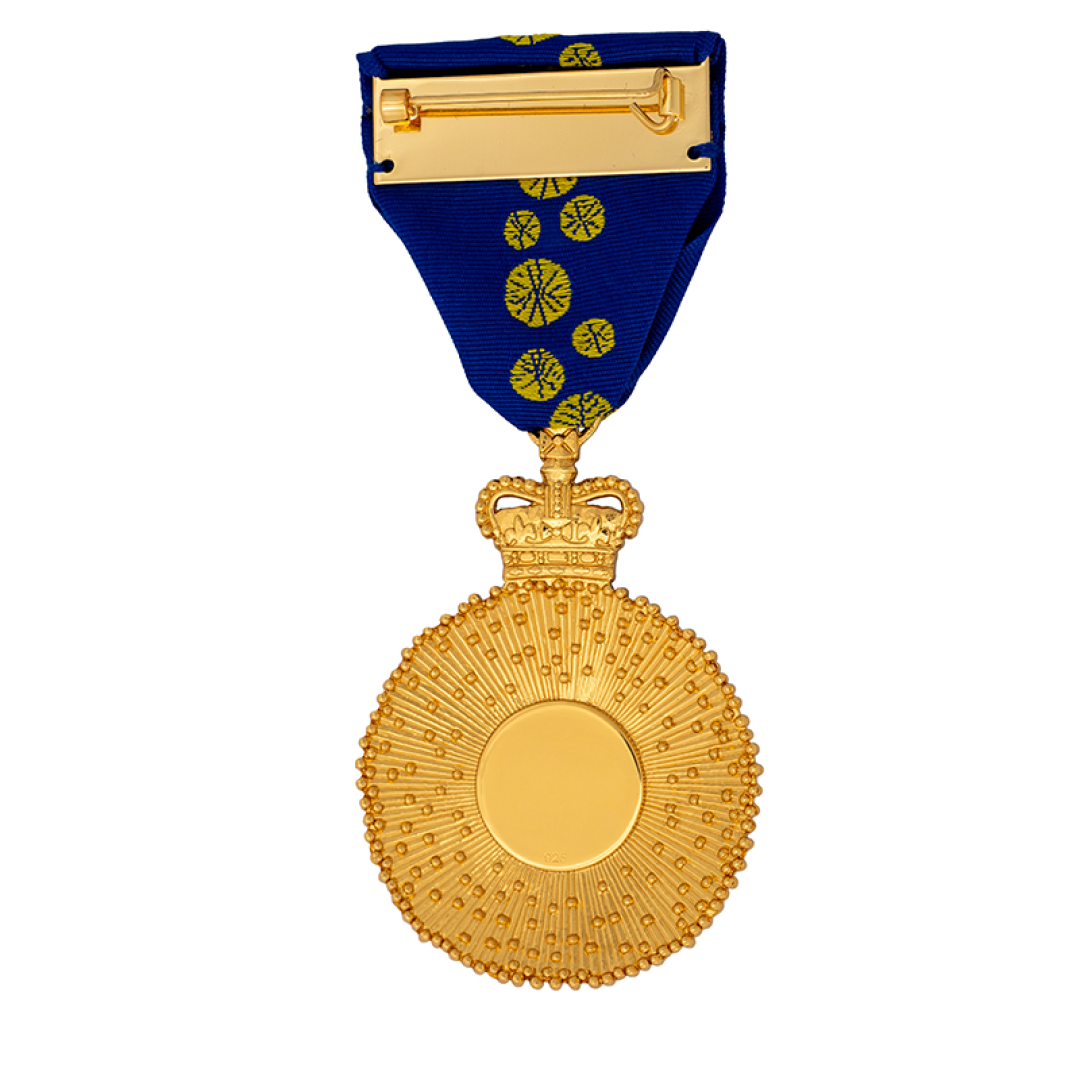
Source: Department of the Prime Minister and Cabinet.
© Commonwealth of Australia 2023.
Licensed under CC BY 4.0.
Medal of the Order of Australia (OAM)
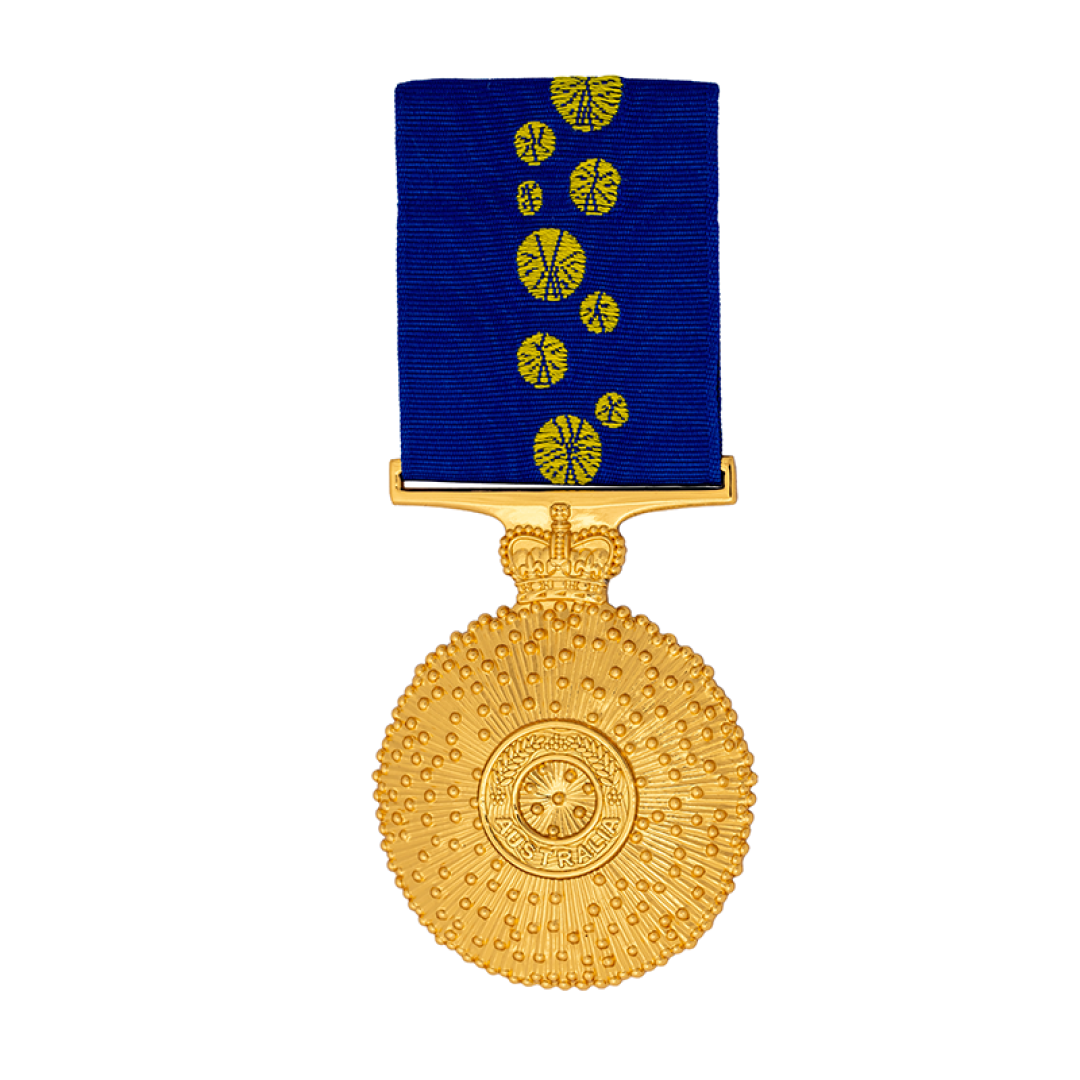
Source: Department of the Prime Minister and Cabinet.
© Commonwealth of Australia 2023.
Licensed under CC BY 4.0.
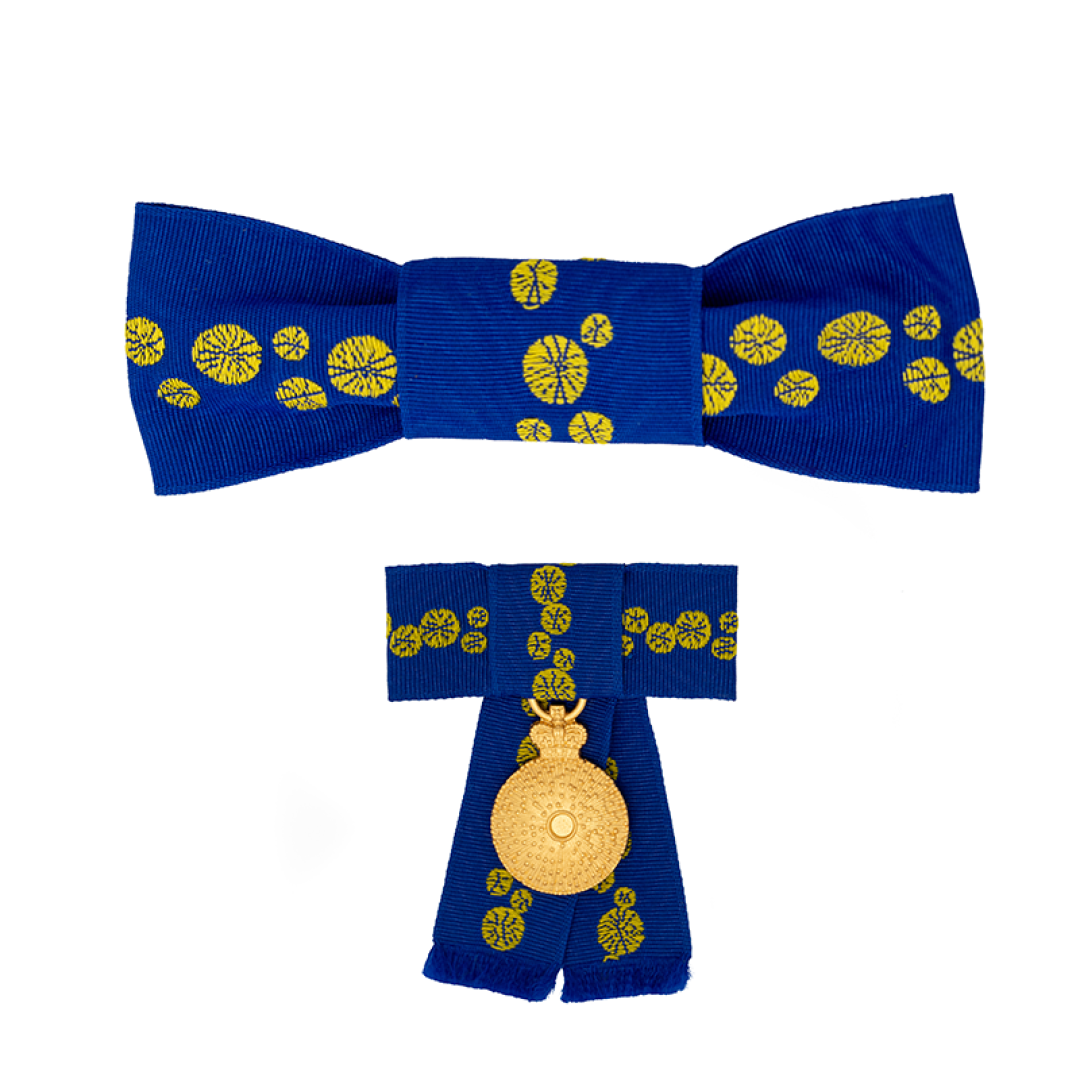
Source: Department of the Prime Minister and Cabinet.
© Commonwealth of Australia 2023.
Licensed under CC BY 4.0.
| Level | Post-nominal | What it recognises | Annual quota, General Division |
|---|---|---|---|
| Companion of the Order of Australia | AC | Eminent achievement and merit of the highest degree in service to Australia or humanity at large | Up to 35, excluding honorary appointments |
| Officer of the Order of Australia | AO | Distinguished service of a high degree to Australia or humanity at large | Up to 140, excluding honorary appointments |
| Member of the Order of Australia | AM | Service in a particular locality, field of activity, or to a particular group | Up to 605, excluding honorary appointments |
| Medal of the Order of Australia | OAM | Service worthy of particular recognition | No annual quota stated in the official quota provisions |
How the Military Division Differs
The Military Division uses the same four levels and post-nominals, but nominations are not made through the public community process. Instead, the Minister for Defence recommends appointments to the Governor-General.
The insignia is broadly the same, but the Military Division ribbon has narrow gold bands on each edge to distinguish it from the General Division ribbon.
Discover more about the Order of Canada.
Who Can be Recognised? Eligibility, Honorary Awards and Exclusions
Next, let's look at the basic eligibility rules for the Order of Australia. 4
Important note: A person whose earlier nomination was unsuccessful will generally have to wait five years before being considered again, although exceptional circumstances can justify earlier consideration.
Yes, in certain circumstances. They can be considered for honorary awards where they have given extraordinary service to Australia or humanity at large. This applies to other foreign citizens too. 5
How to Nominate (Step-by-Step)
Anyone can nominate a member of the community for an award in the Order of Australia for the General Division. Nomination is done online by creating an account via an online portal. 6
Step 1: Confirm impact and gather evidence
You'll want to present a strong nomination by describing the impact and contribution of the person you are nominating.
Some of the evidence that you can highlight includes:
- Extraordinary volunteering service as compared to other volunteers (whether it's the extra time spent or the diverse scale of involvement)
- Exceptional achievement or contribution in their professional field (like a discovery of a new cure or an innovation)
Having said that, that contribution may be professional, charitable, cultural, scientific, educational, sporting or voluntary—including people from all walks of life.

Step 2: Choose referees and prepare statements
Under the revised process introduced on 31 October 2025, the nomination process has required three referees to be entered through the online portal. Each must provide a name and email address and be able to comment on the nominee's contribution. 7
When choosing a referee, it's best to choose someone who is:
- A colleague who can explain the nominee's professional achievements
- A community figure familiar with the results of the nominee's contribution
- A person who has directly benefited from the nominee’s work
Important note: The nominators cannot see their confidential comments of the three referees and may submit only after all three have responded.
When gathering and compiling evidence, be specific about the projects, initiatives, measurable outcomes, publications, or previous awards, where relevant.
Weak statement: Peter Charter has volunteered for a local charity for 28 years and is greatly admired by everyone who knows him.
Strong statement: Over 28 years, Peter Charter developed a volunteer-led support programme for isolated residents, coordinated partnerships with local services and trained successive groups of volunteers. The programme now provides regular support to hundreds of residents each year and has become a model for neighbouring communities.
Step 3: Submit via the Governor‑General’s portal
Finalise the nomination process via the Governor-General’s nomination portal.
- After creating an account, provide the nominee's identifying information, your relationship to their work, a statement of their contribution and any supporting attachments.
- Enter the details of the three referees, and then the portal will send them invitations to provide confidential comments on the nominee.
- Once the three referee reports have been received, log back in and submit the completed nomination for assessment.
Step 4: Timelines: From nomination to investiture
Finally, it is important to understand that the process from the receipt of a nomination to its approval typically takes between 18 months and two years (although some cases may take more than three years).
Here's an overview of the timeline for how to get an Order of Australia:
Nomination submitted
A nominator submits the case through the official portal. Three referees must provide their confidential comments before submission can be completed.
Research and Council review
The Secretariat verifies the evidence and conducts independent research. The Council considers the nomination and may recommend an award, decline it or defer consideration.
Approval and public announcement
The Governor-General approves recommended appointments and awards. Successful recipients are announced in the Australia Day Honours List or the King's Birthday Honours List.
The first list is announced in January, while the second list is announced in June.
Investiture ceremony
Recipients are invited to a ceremony at their state or territory's Government House to receive their insignia.
The ceremony is usually held in April and September.
Important note: Official guidance states that the nominations can take more than three years, but the Council remains committed to reducing delays in the process.
If you’re in the UK
Fret not, you can still nominate online from the UK. But do plan around the time difference and make sure all three referees are reachable by email.
Just make sure to focus on the nominee's Australian or international impact, and explain any cross-border work clearly (if any).
Selection: How Decisions are Made
Ultimately, the final decisions are made by the Council for the Order of Australia. It is an independent body with 19 members, including state and territory representatives, public office holders and community representatives. 8
It usually meets twice a year, usually in February and August, before the two main honours announcements. For every nomination to be considered, a consensus must be reached.
The council will choose the recipients based on these three criteria:
- Achievement at a high level: Has the nominee accomplished something exceptional in their field or community?
- Contribution beyond normal expectations: Has the nominee done more than would reasonably be expected through paid employment?
- Exceptional voluntary service: Does the person's voluntary contribution stand out from the work of other committed volunteers?
Insignia and How Medals are Worn
The insignia of the Order of Australia has a distinctive visual identity. Its central emblem is based on the golden mimosa flower, a plant associated with Australia.
The insignia also incorporates the Crown of St Edward, while the central circlet carries the word “AUSTRALIA” and golden mimosa sprigs.
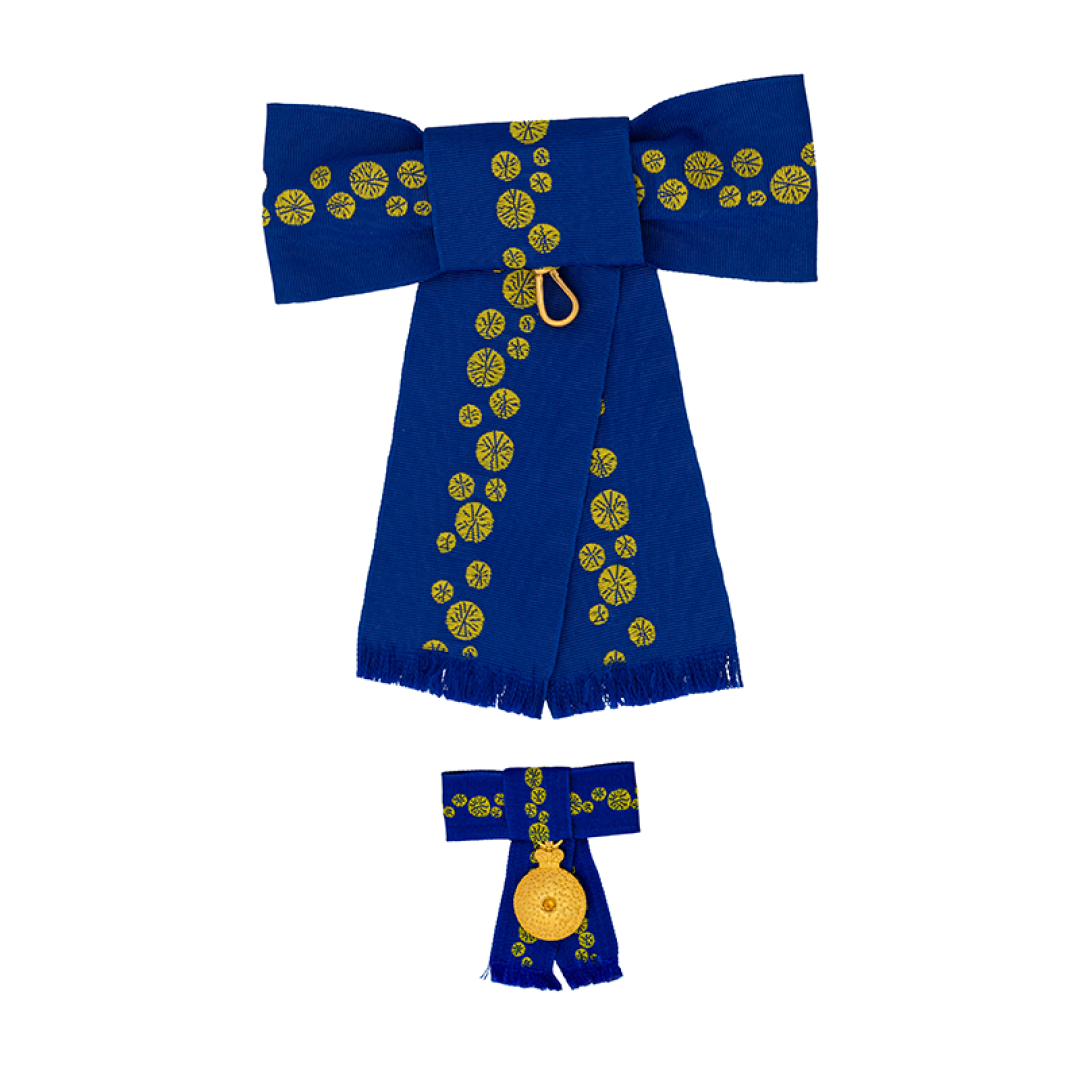
The General Division ribbon is royal blue with a central band featuring scattered golden mimosa blossoms, while the Military Division ribbon uses the same basic pattern, with an additional narrow gold stripe along each edge. The design and dimensions of the insignia vary according to the level of the award.
During formal events, recipients normally wear the insignia or ribbon on the left side of the chest, with the exact arrangement depending on the award, uniform and applicable protocol.
| Award | Full-size insignia | Men | Women in uniform | Women not in uniform |
|---|---|---|---|---|
| Companion (AC) | Gold badge, about 60 mm in diameter, suspended from a 16 mm royal-blue ribbon with gold mimosa blossoms. | Worn around the neck, suspended from the 16 mm ribbon. | Worn around the neck, as for men. | May be worn around the neck, or on the left shoulder suspended from the 38 mm ribbon tied in a bow. |
| Officer (AO) | Gold-plated silver badge, about 55 mm in diameter, suspended from a 16 mm ribbon. | Worn around the neck, suspended from the 16 mm ribbon. | Worn around the neck, as for men. | May be worn around the neck, or on the left shoulder suspended from the 38 mm ribbon tied in a bow. |
| Member (AM) | Gold-plated silver badge, about 45 mm in diameter, suspended from a 38 mm ribbon. | Worn on the left breast, suspended from the 38 mm ribbon. | Worn on the left breast, suspended from the 38 mm ribbon. | May be worn on the left breast, or on the left shoulder suspended from the 38 mm ribbon tied in a bow. |
| Medal of the Order (OAM) | Gold-plated silver medal, about 40 mm in diameter, suspended from a bar attached to a 32 mm ribbon. | Worn on the left breast, suspended from the 32 mm ribbon. | Worn on the left breast, suspended from the 32 mm ribbon. | May be worn on the left breast, or on the left shoulder suspended from the 32 mm ribbon tied in a bow. |
Source: Governor-General of the Commonwealth of Australia, Insignia Ordinance, Constitution of the Order of Australia. 9
Changes and Recent Updates to Know
Based on the revised nomination process introduced on 31 October 2025, the nomination for the Order of Australia now requires three referees instead of four referees.
There are two announcement cycles annually:
- The Australia Day Honours (January 26)
- The King’s Birthday Honours (the second Monday in June)
You might want to learn more about the Order of New Zealand.
Order of Australia vs UK Honours: A Quick Comparison
While the UK and Australia have their own honours systems to recognise exceptional contribution and service, they have different structures, criteria, and nomination processes.
| Feature | Order of Australia | UK honours system |
|---|---|---|
| Main community levels | AC, AO, AM, OAM | MBE, OBE, CBE, KBE/DBE and others |
| Broad equivalent | OAM/AM often recognise substantial local or field-specific service; AO/AC recognise higher-level distinction | MBE/OBE often recognise significant contribution; CBE and above usually reflect greater national or international standing |
| Divisions | General and Military | Civil and Military divisions exist across parts of the system |
| Nomination | Anyone may nominate through the Australian portal; nominations are confidential | Nominations are also possible, but routes and departments vary by honour |
| Non-citizens | Honorary awards may be made for extraordinary service | Honorary awards may also be made, with different rules and restrictions |
| Annual limits | AC, AO and AM have set annual quotas; OAM does not have the same stated quota | Quotas and controls vary by honour and level |
We hope you have enjoyed reading this article and learning about the significance of the medal of the Order of Australia. It's bound to be a helpful resource if you have someone in mind whom you would like to nominate!
References and Where to Apply
- “Member of the Order of Australia.” PM&C, 2014, https://www.pmc.gov.au/honours-and-symbols/list-australian-honours/member-order-australia. Accessed 19 Oct. 2026.
- OFFICE of the OFFICIAL SECRETARY to the GOVERNOR-GENERAL. https://www.gg.gov.au/sites/default/files/2023-08/Order%20of%20Australia%20Booklet_16th%20edition_0.pdf. Accessed 19 Oct. 2026.
- Office of the Official Secretary to the Governor-General of the Commonwealth of Australia. “Recipient Profiles.” Gg.Gov.Au, Office of the Official Secretary to the Governor-General of the Commonwealth of Australia, 2026, https://www.gg.gov.au/australian-honours-and-awards/recipient-profiles. Accessed 19 Oct. 2026.
- “The Order of Australia | Governor-General of the Commonwealth of Australia.” Gg.Gov.Au, 2019, https://www.gg.gov.au/australian-honours-and-awards/order-australia. Accessed 19 Oct. 2026.
- Office of the Official Secretary to the Governor-General of the Commonwealth of Australia. “Frequently Asked Questions - the Order of Australia.” Gg.Gov.Au, Office of the Official Secretary to the Governor-General of the Commonwealth of Australia, 2025, https://www.gg.gov.au/australian-honours-and-awards/frequently-asked-questions/frequently-asked-questions-order-australia. Accessed 19 Oct. 2026.
- Office of the Official Secretary to the Governor-General of the Commonwealth of Australia. “How to Complete the Nomination Form.” Gg.Gov.Au, Office of the Official Secretary to the Governor-General of the Commonwealth of Australia, 2025, https://www.gg.gov.au/australian-honours-and-awards/order-australia/how-complete-nomination-form. Accessed 19 Oct. 2026.
- “Order of Australia – Contacting Referees to Assist Your Nomination.” Western Australian Government, 3 July 2026, https://www.wa.gov.au/government/publications/order-of-australia-contacting-referees-assist-your-nomination. Accessed 19 Oct. 2026.
- Office of the Official Secretary to the Governor-General of the Commonwealth of Australia. “Council for the Order of Australia.” Gg.Gov.Au, Office of the Official Secretary to the Governor-General of the Commonwealth of Australia, 2026, https://www.gg.gov.au/australian-honours-and-awards/order-australia/council-order-australia. Accessed 19 Oct. 2026.
- Office of the Official Secretary to the Governor-General of the Commonwealth of Australia. “Insignia Ordinance.” Gg.Gov.Au, Office of the Official Secretary to the Governor-General of the Commonwealth of Australia, 2019, https://www.gg.gov.au/australian-honours-and-awardsorder-australiaconstitution-order-australia/insignia-ordinance. Accessed 19 Oct. 2026.
Summarise with AI:
Did you like this article? Leave a rating!

 Loading...
